
Why labs are the missing link in patient identification
As trial eligibility becomes more precise, labs play a critical role in turning biomarker strategy into enrollment reality.
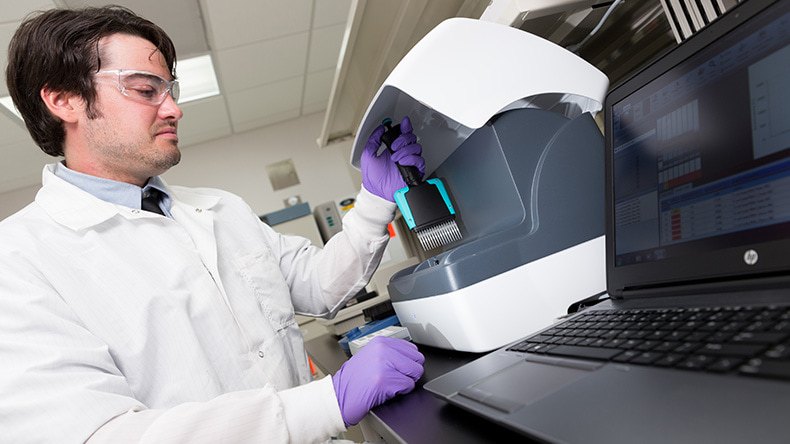
Precision medicine is changing what it means to identify patients for a clinical trial. In many studies, finding patients with the specific diagnosis is no longer enough. Sponsors are increasingly looking for patients with specific biomarkers, molecular profiles or disease characteristics that align with a targeted therapy. This shift has made patient identification more precise, but also more complex.
Too often, the patient identification conversation still centers on traditional inputs such as site databases, diagnosis codes, electronic health records and recruitment channels. These sources are important, but they don’t provide the level of specificity needed for biomarker-driven research. In precision medicine, one of the most important links in getting the specificity needed for patient identification is often overlooked: the lab.
Labs do more than generate data—they help determine whether a biomarker can be measured accurately, if the appropriate assay is available, and if a study can realistically identify and enroll the patients it needs to reach.
Patient identification is no longer just a recruitment challenge
As protocols become more targeted, the gap between a broad disease population and a truly eligible patient population continues to grow.
A diagnosis may indicate that a patient falls within the right therapeutic area, but that alone may not be enough to support enrollment in a precision medicine study. Eligibility may depend on a lab-defined signal, such as a:
- Genomic mutation
- Protein expression pattern
- Pathology result
Patient identification now goes beyond access to patients and relies on access to the right information at the right time.
That is where traditional approaches fall short. Diagnosis codes don’t reveal biomarker status and clinical records may not show whether a patient meets highly specific molecular criteria. Site databases can help identify possible candidates, but they may not be able to confirm who is truly appropriate for a study.
Labs can close this gap by generating and validating the information that defines eligibility in precision medicine.
Labs are more than a source of biomarker data
In many cases, the challenge is not whether a biomarker matters scientifically, but if there is a clinically usable way to measure it.
For routine tests, that may not be an issue. But many precision medicine programs focus on novel, emerging, or highly specialized biomarkers, and in these cases, the right assay may not exist in a form that is ready for clinical use. Teams need to determine what type of test is required, whether an assay or kit is already available, how that assay should be validated, and if it can support the intended use in the trial.
This makes having a lab strategy a critical part of patient identification. If the right test is not ready, the right patients may be difficult to identify at scale, even when the scientific rationale is clear.
Assay readiness can become a bottleneck
If a biomarker is new, emerging, or not part of standard clinical testing, sponsors need to determine:
- What kind of assay is required
- If a commercial kit already exists
- Whether patient samples are available for validation
- If the assay can detect the signal at the level needed for the study
- How the data will be used and what level of validation is required
These are the details that shape the feasibility of a biomarker strategy and have real implications for timelines.
Developing an assay for a new biomarker and bringing it to an appropriate clinical standard can take months. If labs aren’t brought in until just before enrollment is expected to begin, teams may discover that the biomarker strategy is not as ready as they assumed.
In some cases, the scientific rationale remains strong, but the operational path to identifying the right patients is not yet in place. This disconnect can affect the trial downstream, from enrollment delays and constrained testing capabilities to last-minute protocol adjustments and uncertainty around how biomarker data can and will be used.
Early planning is a gamechanger
One of the most important questions for sponsors developing precision medicine programs is not which biomarker matters, but when to start planning for how it will be used.
Early engagement is the strongest approach. When a biomarker begins to show promise in discovery or preclinical development, that is the time to start thinking about what it will take to translate that signal into a usable clinical tool. Early planning gives teams time to evaluate assay options, determine fit-for-purpose requirements and align operational strategy with scientific goals. Sponsors then have more flexibility to make informed decisions when labs are part of the planning process from the earliest days. When labs are left as an afterthought, study teams are often left working backward from compressed timelines.
Not every biomarker strategy needs the same path
A biomarker that will guide patient eligibility may require a different level of rigor than one being used as an exploratory endpoint. A marker that could eventually support a companion diagnostic strategy may require a different long-term plan and investment than one being used earlier in development to refine understanding of the target population.
This is why a fit-for-purpose approach matters. Sponsors need to understand what data they want, how that data will be used and what level of readiness is appropriate at each stage. That clarity can balance speed, scientific rigor and cost while reducing the risk of misalignment later in development.
Patient identification is a cross-functional challenge
To make biomarker-driven identification work, clinical, operational and lab teams need to align early around:
- How biomarkers will be measured
- Where testing will occur
- What sites will need
- How timelines will be managed
Without this coordination, the burden often shows up later as delays, workarounds and missed opportunities to identify the right patients efficiently.
Accessibility is also a consideration. Even if the right assay exists, it still must work in the real-world settings where patients are being seen. Site infrastructure, shipping logistics, testing networks and regional capabilities all influence whether a biomarker strategy can support enrollment as intended.
Greater precision with less burden
As precision medicine progresses, there is growing interest in approaches that improve patient identification while reducing patient burden.
Less invasive testing methods, microsampling and at-home collection models may help expand access to useful biomarker information in some settings. Advances in genomics and proteomics may uncover actionable signals that support more targeted trial strategies. AI and broader data analysis may also enable sponsors to refine identification approaches and make better use of available information.
Though promising, these innovations don’t replace the need for thoughtful planning. Their value depends on how well scientific insight, lab capabilities and trial execution are brought together.
A more connected approach to patient identification
Finding the right patients for precision medicine trials requires a broader view of patient identification—one that goes beyond recruitment tactics and considers the full path from biomarker strategy to enrollment readiness. Labs play a critical role in the process, generating the signals that define eligibility, support the assays that make those signals usable and connect scientific intent with operational execution.
When labs aren’t integrated in the planning process, patient identification can become slower, more fragmented, and more difficult to scale. When linked early, labs help create a more informed, more realistic path to enrollment.