The future of GMP labs: Building the capabilities drug developers need
Learn how our GMP labs are evolving to support increasingly complex drug development.
GMP laboratories have become increasingly important in clinical development as modern therapies grow more complex, regulatory expectations continue to evolve, and development timelines depend on reliable analytical testing and manufacturing.
To navigate this complexity, the right GMP lab partner plays a strategic role in generating analytical data sponsors need to demonstrate product quality, support regulatory submissions, and keep development timelines moving from early clinical trials through commercialization. We spoke with Dave Riser, vice president and general manager of PPD™ Laboratory services, GMP Lab, about how investments in capacity, technology and global infrastructure are helping the organization meet the evolving needs of drug developers. Riser previously served as director of biologics for GMP labs and led the biologics business in Middleton, Wisconsin, where he brought together teams spanning cell and gene therapy, biopharmaceuticals, microbiology, cell-based bioassays and biosafety. This is the first of a two-part interview.
Q. Tell us about PPD GMP Lab services’ role in the drug development process.
As part of Thermo Fisher Scientific, our business is designed around an important objective: to provide clients with the scale of a global network while maintaining the responsiveness and accountability of local leadership. Our GMP laboratories include sites in Middleton, Wisconsin, and Athlone, Ireland. Each operation has dedicated local leadership, providing clear ownership and accountability at the site level while working within our unified global framework. This model enables us to respond to sponsors’ needs locally while delivering consistent quality, scalable capacity and business continuity across our operations.
Understanding the pressure sponsors are under, our role is to generate accurate analytical data customers need to make timely development, manufacturing and regulatory decisions with confidence. The value of a high-performing GMP laboratory extends beyond data generation. It’s about delivering data in a way that helps our clients make better business decisions.
By embedding technical expertise directly within our GMP operations and leveraging shared functional leadership across sites, we combine scientific knowledge with the responsiveness, capacity, and consistency needed throughout development and commercialization.
Q. Can you share your plans for capacity expansion and the key growth opportunities you see ahead?
The analytical needs of our clients continue to evolve as therapeutic modalities become increasingly complex. Our investment strategy is focused on ensuring clients have the capacity, technical expertise and global infrastructure needed to keep pace with that evolution.
We’re making significant investments across three key areas:
- Expanding our global laboratory footprint
- Increasing capacity at existing sites
- Adding advanced analytical and digital capabilities to support emerging therapeutic modalities
Every investment is guided by our goal of enabling clients to bring therapies to market faster without compromising quality, compliance or supply continuity.
Q. You mentioned your global lab footprint. What are your geographic growth plans?
Our geographic expansion is driven by two priorities: increasing capacity where demand is growing and strengthening business continuity across our global network.
For example, at our Athlone lab we’re expanding analytical capabilities in microbiology and cell-based bioassays while increasing storage capacity to support future growth. We’re also investing in automation to improve efficiency and scalability.
These investments strengthen Ireland’s role as our European GMP hub while enhancing business continuity between our U.S. and European operations. Every expansion decision is based on long-term sustainability, access to scientific talent and proximity to our customers.
Beyond Ireland, we’re evaluating opportunities to expand our footprint in APAC (Asia-Pacific) and mainland Europe as customer demand evolves. We’re exploring organic growth, strategic acquisitions and customer-specific partnership models where they create value.
Q. How are you investing in your facilities to support growth?
Because we’ve already discussed our investments in Ireland, I’ll share our plans for our U.S. hub in Middleton, Wisconsin. There, we’re making significant facility investments to support continued growth, strengthen business continuity, and enable future capabilities.
To increase capacity and resilience, we are adding 15,000 square feet of sample storage space, with an additional 10,000 square feet planned in a future development phase. This phased approach gives us the flexibility to grow within the space and support future needs—whether for biosafety or additional sample storage expansion—while reducing operational risk in the event of equipment or infrastructure failure.
We’re also upgrading our facilities to support advanced technologies and new capabilities, such as new testing modalities. Our upgrades include plans for an additional 12,000 square feet dedicated to bioassay capabilities. These investments position us to support emerging therapeutic modalities and future customer needs.
There’s another exciting update I want to share: our growth also focuses on sustainability. We’re upgrading the main campus to reduce emissions while modernizing infrastructure to support growth in areas such as microbiology and device functionality. Together, these facility investments reduce risk, increase scalability, and ensure our GMP operations can support evolving programs over the long term.
Q. How are you leveraging technological advancements to meet evolving client needs?
Our technology investment strategy focuses on generating deeper scientific insight and improving laboratory performance through automation and operational efficiency.
One of our most significant investments has been GMP-grade next generation sequencing (NGS), which enables comprehensive sequence characterization from a single experiment while generating richer analytical data and reducing reliance on multiple individual assays. This technology strengthens our capabilities across biopharmaceutical and cell and gene therapy applications. We have also expanded our advanced microscopy capabilities with our Prisma E Scanning Electron Microscope (SEM). This supports complex particle identification and product characterization with minimal sample preparation.
Within our extractables and leachables portfolio, we have invested in high-resolution GC-MS and LC-MS platforms that enhance compound identification and risk assessment.
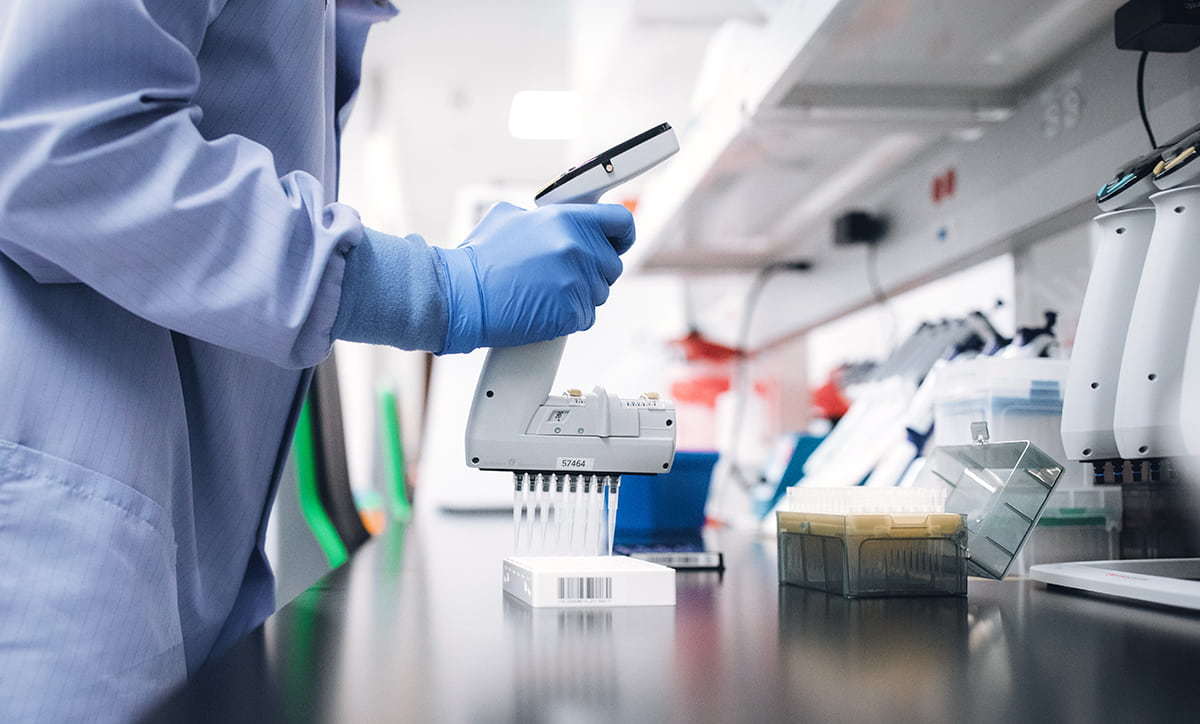
Automation is another major area of investment to improve workflow efficiency, reduce variability and support right-first-time execution. Our automation capabilities range from liquid handling to more comprehensive workflow automation, which helps streamline processes across multiple analytical platforms.
Also of note, we’ve standardized analytical methods within our raw materials program, establishing platform methods for biologics and have qualified more than 400 materials to enable rapid delivery of high-quality analytical data.
Looking ahead, we continue to expand our capabilities through rapid microbiology, advanced container closure integrity testing (CCIT) and ISO certification to support broader medical device testing services. These investments enable us to effectively support and guide our clients through the product lifecycle.
Q. How are digital technologies transforming your laboratory operations?
We are modernizing the digital foundation of our GMP laboratory operations to create a scalable, globally connected laboratory ecosystem. Our objective extends beyond incremental improvements. To do this, our digital strategy focuses on four priorities:
- Building standardized, GMP-compliant digital workflows that improve data quality
- Improving operational consistency
- Expanding intelligent automation
- Developing future-ready laboratory infrastructure
Together, these initiatives improve speed, predictability, and quality while maintaining compliance and audit readiness. They also provide our clients with greater transparency throughout the analytical lifecycle.
We’re also continually exploring and evaluating next-generation laboratory informatics, AI-enabled technologies and expanded automation to further strengthen scalability, improve data connectivity and harmonize operations across our global network.
Whether you’re advancing a small molecule or biologic, our GMP laboratory experts can help you navigate your analytical testing needs
Recommended for you