
Corcept Therapeutics + PPD Biotech Solutions
As Corcept Therapeutics leads the way in researching and developing cortisol modulators, the PPD clinical research business of Thermo Fisher Scientific is excited to be part of your journey. We appreciate the opportunity to be your trusted partner in the upcoming Expanded Access Programs and believe this is just the beginning of how we can collaborate for Corcept Therapeutic’s success.
As your CRO partner, our goal is to deliver innovative solutions tailored to your needs, with a focus on collaboration, forward thinking, data quality, speed and agility. Our combined CDMO and CRO offerings enhance our ability to support you under one roof. We share your dedication to your patients’ health and your professional success and are fully committed to support your voyage of unlocking the potential of cortisol modulation to revolutionize the treatment of serious diseases.

Why partner with us?
At PPD, we understand the unique challenges Corcept Therapeutics may face in developing and commercializing innovative therapies. With 80% of our customers returning for repeat business and 65% of our revenue coming from biotech companies, we pride ourselves on building strong relationships. We achieve this through a commitment to true partnership, innovation, flexibility, and trust.
Here is what you can expect from PPD:
- Elevate your outcomes: Achieve clinical and operational excellence at every stage
- Accelerate your timeline: Minimize delays with efficient project management and execution
- Simplify your journey: Let us handle the complexities so you can focus on breakthrough science



Neurology
Your commitment to developing meaningful solutions to neuroscientific and psychiatric challenges is shared by our global neuroscience experts, who bring deep therapeutic insight and operational precision to complex CNS and rare neurological programs.
In the past five years, we have supported more than 450 neuroscience clinical studies, including over 50 rare neurological disorder trials, representing more than 60,000 patients and 9,000 sites globally. This includes 582 rare disease trials overall, with 162 rare neurology studies and 7 ALS trials, as well as 50 psychiatry trials, demonstrating both scale and specialization.

studies

sites

patients
Accelerating Phase IIIa ALS trials with data-driven enrollment & global site networks
Our ALS experience is informed by benchmarks derived from 1,000+ ALS patients enrolled across prior studies, combined with long-standing relationships with high-performing ALS centers in 30+ countries. These insights enable data-driven feasibility, realistic enrollment forecasting, confident site selection, and proactive risk mitigation.
Our proven feasibility and patient-engagement frameworks are designed to shorten start-up timelines, reduce screen-failure rates, and support predictable delivery in competitive rare neurology landscapes.
PPD, part of Thermo Fisher Scientific, proposes a strategically designed and execution-ready approach to support Corcept’s global Phase IIIa ALS study. This program is built upon a senior, ALS-experienced leadership team, data-driven enrollment modeling, and operational strategies specifically tailored to the complexities of neurodegenerative rare disease trials.
This study will be conducted across 12 countries and 90 sites, targeting 477 randomized patients, with an assumed enrollment rate of 0.44 patients per site per month (p/s/m) and a projected 20% screening failure rate.

CORT113176-659 protocol considerations
The main efficacy objective of CORT113176-659 is to demonstrate an effect on survival as assessed by the proportion of participants who die within 52 weeks.
FDA guidance recommends primary endpoints that combine function (e.g., ALSFRS-R decline) with survival, such as the Combined Assessment of Function and Survival (CAFS).
Extending the dose increase steps during the blinded dose-titration period for the placebo arm patients before entering the OLE to a fixed 2-week (or 3-week) period instead of the proposed flexible 1-to-3-week period. Fixing the up-titration steps to a longer period will reduce an unwanted unblinding due to new AE and simplifying the site tasks and the CT material.
The protocol proposes succinctly an external matched control arm, in addition to the randomized placebo arm, that will equalize the treated and non-treated patients. The protocol should clarify the rationale and include entry criteria and study handling of these non-randomized controls.
The protocol already contains wording on remote study visits however it should be developed further to avoid inquiries from RA/ECs.
Adequate patient population is critical for study success
- If survival is the primary endpoint, consider using a TRICALS -6 to -2 population instead of a -6 to -3 as per synopsis.
- A TRICALS window of −6 to −2 enriches for a smaller, more homogeneous group of very fastprogressing, highrisk ALS patients, whereas −6 to −3 still captures high risk but admits somewhat slower progressors and more heterogeneity in baseline features.
- Consider also including patients with FVC/SVC >70%.
Swallowing concerns
- Consider excluding patients with bulbar onset with PEG and/or that in the opinion of the PI will likely need PEG in the next 12 months, since this is not part of the TRICALS risk profile score
- Consider excluding patients with current change in diet that may represent a higher risk of inability to swallow capsules during the study.
Corcept study is NOT a burdensome study for ALS patients
- Oral IP
- Minimum number of functional (ALSFRS-R; CAFS; SVC) and PRO scales (ALSAQ)-40, EQ-5D-5L).
- Most of the study visits are remote, only 6 site visits are scheduled, with increasing intervals between visits as the study progresses and the functional impairment of patients increases.
Statistical considerations for Corcept ALS phase III trial
Intercurrent events and estimands
Possible intercurrent events (ICEs) and corresponding estimands strategies are required to describe in protocol for a confirmatory trial per regulatory guidance. In protocol development, possible intercurrent events and how those events may affect assessment of key study endpoints will be carefully analyzed and reasoned. From there, corresponding estimands strategies will be proposed and relevant statistical analysis methods will be properly planned.
Possible intercurrent events may include premature early discontinuation from study treatment by reasons, use of protocol prohibited medication, and ‘rescue’ medication.
Treatment policy estimands is regulatory favorited for confirmatory trials. Composite strategy may be applicable to some endpoints in this trial. Hypothetical strategy can be used as supplementary estimands for supportive analyses.
Missing data handling
How to handle missing data is required to propose with justifications to assumption of missingness mechanisms, e.g. missing at random (MAR) or missing not at random (MNAR). And corresponding missing data analysis approaches will be proposed for different types of endpoints (binary, continuous, or time-to-event, etc.) in the protocol, e,g, multiple imputation methods.
When hypothetical strategy is used, it may result in more missing data, as observed data after an intercurrent event will be counted as missing.
Sensitivity analysis
To echo estimands strategies and missing data handling, corresponding sensitivity analyses are expected to be well-proposed in protocol and planned in SAP, which will help to obtain robust estimations and minimize post-hoc analyses.
External control arm
It is recommended that ECA-related issues are addressed in the main protocol, as statistical analyses to the primary and key secondary endpoints rely on the ECA.
Per FDA draft guidance for ECA study, following components are critical and needed to describe in the protocol:
- Data source justifications, such as why specific databases are selected, e.g. PRO-ACT (pooled resource open-access to ASL clinical trials database), or ASL/MND natural history consortium database; how completion of selected data for propensity score (PS) matching and outcome analysis; evaluations on data quality.
- Appropriate working procedure to minimize bias in PS matching is described in the protocol. For example, an independent team to work on matching, in which members of this team are unblinding but can access baseline data only, in a restricted computation working area, etc.
Interim analysis
Suggest to research if an IA may help for possible earlier end of placebo-control period, with comprehensive considerations of primary and key secondary endpoints, as well as study enrollment progression.
For example, on the primary endpoint only, when 321(214/107 in active treatment/control groups) randomized subjects pass Week 52, with 107 external control patients matched, based on the assumptions in the draft protocol, there is at least 80% statistical power to detect the risk difference. The trial can claim success in the primary endpoint about 1+ year earlier than current plan, if enrollment rate is about 120/year.
Analysis methods on key endpoints
Following statistical methods are recommended per our experiences and FDA guidance on adjusting for covariates in RCT (May 2023).
- Binary endpoints (e.g. the primary): g-computation method for risk difference in proportion is recommended. This analysis gives marginal treatment effect estimates, enables the outcome model to include continuous covariates for adjustment, and can weigh with inverse probability of treatment weights (IPTW) at subject level.
- Time-to-event endpoints: weighted log-rank test, Kaplan-Meier estimator, and stratified proportional-hazards model with IPTW, instead of stratified by IPTW. Continuous weights at subject level should be more statistically efficient versus categorical IPTW stratifications.
- IPTW approach: a) pre-specified propensity score model – which prognostic variables are included in the model to balance baseline characteristics; b) clarifying average treatment effect (ATE) IPTWs are used in outcome analysis models for marginal treatment effect estimates.
Meet your CORT113176-659 study team!

Patti Shugarts
Vice President, Rare Disease & Neurology
Patti Shugarts serves as your Executive Sponsor, with more than 25 years of experience in clinical research across rare neuromuscular and neurodegenerative diseases. She brings deep expertise in genetic and gene therapies, pediatric trials, and first-in-human and pivotal studies. Patti serves as a neurology escalation point for study teams, is a member of the Rare Disease and Pediatric Center of Excellence Steering Committee and is passionate about reducing patient and caregiver burden through patient-focused trial design.

Diljit Uppal
Senior Director, Project Oversight, Rare Disease, Neuroscience
Diljit Uppal serves as the Project Oversight with more than 26 years of clinical research experience. She brings extensive expertise in rare neuromuscular, neurodegenerative, hematological, and metabolic disorders, including pediatric, first-in-human, and pivotal trials. Diljit provides strategic oversight, serves as a key escalation point for study teams, and is passionate about reducing patient and caregiver burden in rare disease clinical trials.

Alberto Lledó,MD, PhD
Vice President, TAH, Medical Science & Strategy
Alberto Lledó, MD, PhD, serves as your therapeutic advisor and is a board-certified neurologist with a PhD in neuroimmunology, providing strategic medical and therapeutic oversight across neuroscience programs. He provides strategic medical and therapeutic oversight for neuroscience programs, with expertise in movement disorders, neurodegeneration, demyelinating diseases, and neuropathic pain. Dr. Lledó brings experience from both large pharma and biotech settings and maintains active clinical practice to ensure patient-centered decision-making.

Stefano Cotti Piccinelli
Associate Medical Director | Neurology, Neuromuscular & Rare Diseases
Stefano Cotti Piccinelli serves as your ALS Subject Matter Expert and Medical Oversight lead, providing medical and scientific support across ALS clinical programs. He brings over six years of clinical and research experience in neuromuscular and rare neurological diseases, has authored more than 50 publications with over 2,000 citations, and has diagnosed and treated over 200 ALS patients. Stefano has participated in more than 10 ALS clinical trials as an investigator and has served as Medical Monitor, with a strong focus on safety oversight, protocol training, and customer-focused trial execution.

Katie Degnen
Associate Director, Project Delivery
Katie Degnen serves as Project Lead, driving and owning the overall delivery of the contracted project through cross-functional leadership. She serves as the primary point of contact between Corcept and PPD, with a strong focus on project metrics, risk assessment, and contractual deliverables. Katie brings over 19 years of experience in the clinical research and pharmaceutical industry, with deep expertise managing global Phase I, II, and III trials across Neurology and Rare Disease, including a Phase Ib ALS study in the US and EMEA. She is known for clear, open communication and for leading and empowering high-performing cross-functional teams.

Radka Kolenovska
Associate Director, Project Delivery
Radka Kolenovska serves as Project Lead, acting as a customer-focused leader responsible for overall project delivery. She aligns internal and external stakeholders to ensure smooth execution, leads internal teams, manages financial activities, and serves as the primary point of contact for the client. Radka brings more than 20 years of experience in the clinical research industry, including 15 years managing complex projects across rare and neurological disease indications. Her experience includes large, global Phase I–III trials with complex designs and multiple stakeholders across EMEA, the US, and APAC, including a Phase II ALS study. She holds an MSc in Biochemistry.

Juliana M. Burns, PharmD, PhD
Feasibility Strategist, Neuroscience & Rare Disease
Juliana M. Burns, PharmD, PhD, serves as Feasibility Strategist, leading initial country analysis and feasibility strategy to support study planning. She develops site list strategies based on ideal site profiles, oversees feasibility survey development and programming, and conducts site tiering to support PSA recommendations. Juliana brings over 10 years of experience in the research and pharmaceutical industry, including four years with PPD in feasibility. Her experience spans Phase II and III studies across multiple indications, with a strong focus on rare endocrine and neuromuscular diseases, including Prader-Willi syndrome, Angelman syndrome, DM1, FSHD, and DMD.

Joana Granja
Regulatory Affairs Lead
Joana Granja serves as Regulatory Affairs Lead (RAL), overseeing all Competent Authority, Regulatory Authority, and Ministry of Health submissions across participating countries. She acts as the primary point of contact for regulatory matters throughout the study lifecycle and provides program-level regulatory support. Joana brings more than 12 years of clinical research experience and holds a Master’s degree in Pharmaceutical Sciences and Pharmaceutical Medicine. She has managed Phase I–IV studies across a wide range of indications and global regions, including North America, EMEA, APAC, and Latin America, working closely with functional leads and clients to successfully meet study timelines.
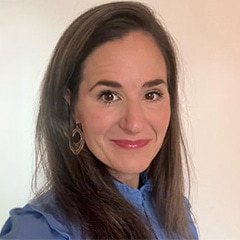
Basia Tigcheler
Global Clinical Lead
Basia Tigcheler serves as Global Clinical Lead at PPD Clinical Research Services, directing and owning end-to-end clinical project deliverables at a global level from study start through close-out. She provides project-specific training, leadership, and support to clinical teams, and develops clinical project plans, tools, and monitoring strategies. Basia brings more than 15 years of clinical research experience across multiple indications, including complex rare and neurological diseases, with experience in Phase I, II, and III studies in both adult and pediatric populations, including a Phase I ALS study in EMEA. She holds an MSc in Nutrition & Health.

Executive conclusion
PPD’s approach to Corcept’s Phase IIIa ALS study is built on experienced leadership, realistic planning, and disciplined execution within a highly competitive and operationally complex landscape.
With a proposed footprint of 90 sites across 12 countries, targeting 477 randomized patients and modeled at 0.44 patients per site per month with a 20% screen failure rate, our projections reflect practical ALS enrollment behavior rather than optimistic assumptions. Structured scenario planning supports a base-case FPI of September 2026, with opportunity to accelerate through start-up efficiency and early activation ramping.

PPD is prepared to execute this study with urgency, rigor, and the specialized ALS expertise required to succeed in today’s landscape.