
Finding the opportunity in clinical trial complexity
How sponsors can distinguish valuable complexity from unnecessary burden.

Drug development has always required teams to balance scientific ambition with practical execution. Today, that work is shaped by many intersecting pressures, including scientific innovation, evolving regulatory expectations, patient needs, data demands and operational realities. Together, these forces are making complexity one of the defining features of the current R&D environment.
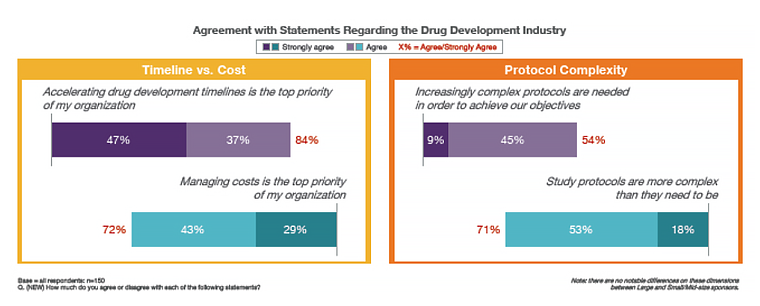
Each year, The Pulse explores the trends, challenges and opportunities shaping pharmaceutical R&D. In The Pulse 2026, the PPD™ clinical research business of Thermo Fisher Scientific surveyed 150 pharmaceutical and biotech leaders around the globe on topics ranging from clinical development timelines and patient-focused strategies to AI/ML adoption, outsourcing and industry challenges. Across those findings, complexity emerged as an important theme, not only as a source of burden, but also as a reality sponsors must navigate to achieve certain development objectives.
Much of this complexity is unavoidable, and even beneficial to the drug development process, as oversimplification can lead to processes that don’t support the needs of drug developers. The opportunity here is not to eliminate complexity entirely, but to better distinguish complexity that creates value from complexity that creates unnecessary burden. In an environment shaped by pressure and uncertainty, the organizations best positioned to move forward will be those that make complexity more purposeful, more manageable and more closely tied to better decisions for patients and development teams.
Why complexity has become unavoidable
Clinical trial complexity is increasing because drug development programs are being asked to do more. Today’s studies often need to support safety and efficacy decisions as well as regulatory strategy, evidence generation, commercial planning and patient access. At the same time, sponsors are navigating more advanced modalities, specialized patient populations, global study operations and rising pressure to generate useful data earlier in development.
Several forces are contributing to this shift:
- Broader evidence needs: Sponsors often need data that supports regulatory, clinical, commercial and access-related decisions.
- More specialized science: Advanced modalities and targeted therapies can require more specific endpoints, eligibility criteria and operational planning.
- Patient recruitment realities: More defined study populations can make identifying, enrolling and retaining participants more challenging.
- Global study execution: Multiregional studies add operational, regulatory and site-level considerations.
- Pressure to make each study work harder: Sponsors are looking to answer more questions and generate more meaningful data within each program.
This is why complexity is not always a sign of overdesign. In many cases, it reflects the realities of modern evidence generation. The challenge is distinguishing complexity that supports better decisions from complexity that adds burden without improving outcomes.
When complexity adds value
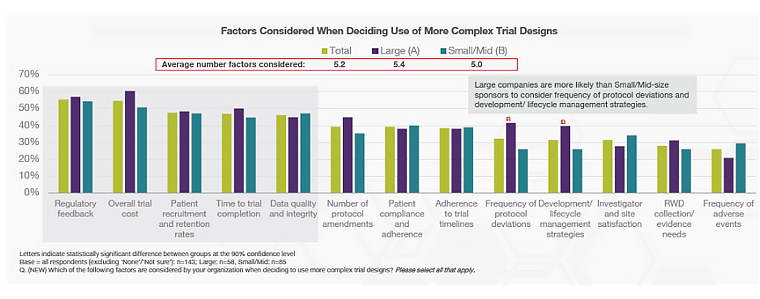
In clinical development, not all complexity is an indicator of waste. Some complexity is necessary and the result of asking the right questions and recognizing the unavoidable nuances of trial design. In many cases, a more complex trial design may be justified when it generates stronger evidence or creates a more efficient path through development. Sponsors pointed to more robust data outcomes, reduced timelines and more opportunities to gather data as reasons complex designs can be worthwhile. That same logic shows up in approaches such as basket trials that test across multiple indications, Bayesian models that may reduce sample size in Phase II studies, expanded early-phase designs that generate later-stage insights and surrogate endpoints that support earlier readouts.
Simplicity is valuable when it reduces burden, but it is not always the right measure of study quality. A design element that adds operational effort may still be worthwhile if it strengthens the evidence, improves decision-making, answers a critical development question or shortens another part of the development path. When complexity creates value that justifies its burden, it becomes a strategic tool, rather than a hindrance.
When complexity becomes a burden
Complexity becomes problematic when it adds effort without adding value. A protocol element may be intended to strengthen a study, but if it increases site workload, makes participation harder for patients or creates more coordination for study teams without improving the evidence, it starts working against the program’s goals.
Unmanaged complexity often shows up in practical ways:
- For patients: More frequent and longer visits, added procedures or participation requirements that make enrollment and retention harder
- For sites: Greater administrative burden, increases in protocol requirements and more opportunities for deviations or delays
- For study teams: More coordination, amendments, operational friction and pressure on timelines and budgets
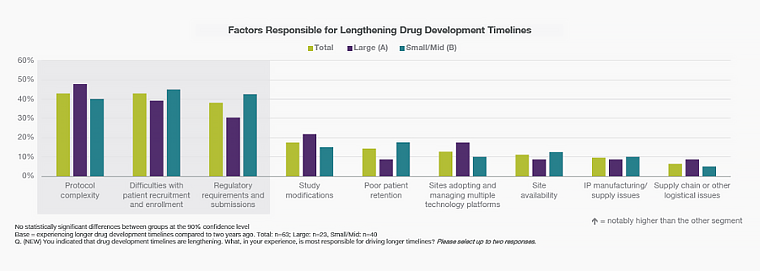
The data from The Pulse demonstrates that longer timelines are primarily driven by complex protocols, recruitment and enrollment challenges and regulatory requirements. Rising clinical trial costs, patient recruitment and increasing trial complexity also rank among the top challenges identified by sponsors, reinforcing how closely these pressures are connected. When complexity contributes to delayed enrollment, protocol amendments, site burden, higher costs or longer timelines, the question shifts from whether the design is scientifically ambitious to whether it is worth the burden it creates.
Designing and managing complexity with purpose
The goal should be to make every layer of complexity justify its existence. For sponsors, that can be achieved with a disciplined approach to protocol design. Before a study is finalized, teams should pressure-test which elements are essential, which are optional and which may create avoidable burden. A design choice that supports scientific value or data quality may be worth the added effort. A design choice that slows site execution or adds operational work without strengthening the study may need to be reconsidered.
A more intentional design process brings several perspectives together earlier:
- Patient experience data to identify barriers to participation
- Site input to anticipate execution challenges
- Earlier regulatory planning to clarify evidence expectations
- Data quality considerations to preserve the integrity of decision-making
When sponsors evaluate scientific value, patient feasibility, site execution, regulatory expectations and data quality together, they are better positioned to preserve the complexity that improves the study and reduce the complexity that gets in the way.
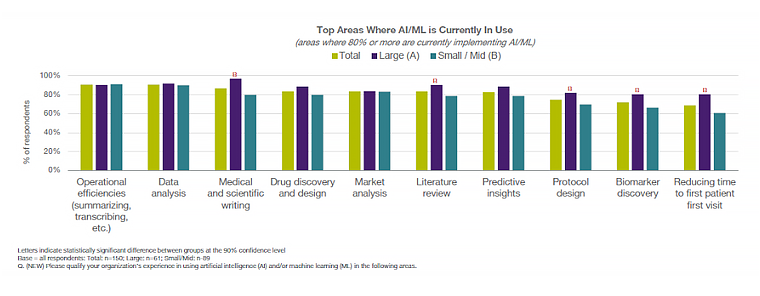
AI/ML, outsourcing and external partnerships are becoming important ways sponsors manage complex development programs. AI/ML can support data analysis, predictive insights, operational efficiency and decision-making, but only when teams trust the outputs, understand how to use them and can integrate the technology into existing workflows. Outsourcing can add specialized expertise and capacity in areas such as clinical laboratory and diagnostic services, patient recruitment, site support and data management. Technology and partnerships should make complexity easier to manage, not create more layers of systems, handoffs or vendor relationships. Sponsors that use these resources with clear goals, governance and success measures can turn complexity from a source of friction into a more deliberate part of development strategy.
Turning complexity into strategic advantage
Complexity will remain part of pharmaceutical R&D for the foreseeable future, which means the path forward is not about removing it entirely. The organizations best positioned for success will be those that manage complexity more intentionally and make clearer decisions about what belongs in a study, what adds value and what creates avoidable burden. Useful complexity should support stronger evidence, better decisions, improved patient experience or more efficient execution. Unnecessary complexity should be identified earlier and reduced before it affects enrollment, timelines or costs.
In the next phase of clinical development, the differentiator for successful drug developers will be their ability to decide which types of complexity are worth carrying and to identify the areas that need to be streamlined.
Get deeper insights into the pressures shaping pharmaceutical R&D and how sponsors are responding to complexity and uncertainty.
Recommended for you